How to Eat Ethically in a World of Vanishing Seafood

http://www.amazon.com/gp/product/1596916257?ie=UTF8&tag=adifkinofdoc-20&linkCode=xm2&camp=1789&creativeASIN=1596916257

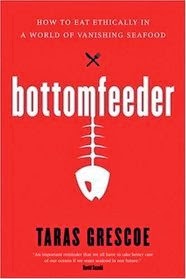
Taras Grescoe’s book, Bottomfeeder: How to Eat Ethically in a World of Vanishing Seafood, offers an adventurous, in-depth exploration of fishing and aquaculture practices around the world.

His quest to find the best fish meal in a world of diminishing choices takes him to seafood capitals like Chesapeake Bay, Nova Scotia, British Colombia, Marseilles, Japan, China and India. From fish farms and fish stick factories to sushi bars, skipjacks, and supermarkets, Grescoe gives an insider’s look at important issues from a variety of perspectives.

Grescoe not only investigates problems surrounding fish and seafood like environmental pollution, ecosystem damage and loss of biodiversity. He also suggests solutions, offers tools for choosing seafood, and discusses the pleasures and virtues of eating at the bottom of the food chain. “For every fish I have crossed off my list,” he writes, “I have added several more.”

Now in paperback, this is a must-read for seafood lovers and environmental advocates alike.

The Toxic Chemistry of Everyday Products


Mark Schapiro’s book, Exposed: The Toxic Chemistry of Everyday Products and What’s at Stake for American Power, is an eye-opening account of common chemicals and environmental toxins that scientists around the world have linked to rising rates of cancer, neurological disorders and reproductive problems including premature birth and infertility.
   
Common compounds in cosmetics, hair dye, perfumes, shower curtains, toys, construction materials, cars, electronics and even food have been identified as hormone-disrupting chemicals, reproductive toxins, neurotoxins, and carcinogens.

Due to a shocking lack of standards, the United States has become a dumping ground for toxic products banned in European countries. Schapiro explores and explains the problems, and demonstrates that solutions are already available.

Wild Food

We all should include wild foods in our diet. From leafy greens and berries to wild game and mushrooms, wild foods have a lot to offer that cultivated foods do not.

Plants that live in the wild must defend themselves against diseases, insects, animals and UV radiation from the sun. The phytocompounds they need for survival - like antioxidants and bioflavonoids - are nutrients that our bodies need too.

Some constituents, like alkaloids, taste bitter. In our current culture obsessed with all things sweet, bitter foods have fallen out of favor. But many of them are good for us, like baby dandelion leaves that support healthy liver function. (The liver filters out waste products from our blood as well as unnecessary and toxic compounds that we inhale or ingest.)

Common varieties of foods found in stores have not only been selected for sweetness, but also for shelf life. Compared to cultivated foods, their wild counterparts often contain higher amounts of omega-3 fatty acids. These fats are essential to our diet because our bodies cannot make them. Plant sources of omega-3s are fragile, easily oxidized and best picked fresh. (Oxidation turns fats toxic and promotes the production of harmful free radicals.)

Purslane, for example, contains more omega-3 fats than any other green leafy vegetable. This sprawling plant grows close to the ground with succulent reddish stems, green paddle-shaped leaves and tiny yellow flowers. Commonly considered a weed, it is found in lawns and meadows. Purslane's delicious sweet and sour flavor makes a winning contribution to salads, soups and stir fry. And it's easy to forage if you know where to look and how to identify it.

Wild game and fish are also higher in omega-3 fats because they too have foraged for their food and eaten wild plants (or eaten wild animals that have eaten wild plants, in the case of carnivores). In contrast, meat from animals raised in confined animal feeding operations (CAFOs) and fed grain is low in omega-3 fats. Wild animals are also a healthier choice because they haven't been exposed to antibiotics, pesticides or growth hormones common in CAFOs.

But before you forage for your dinner, follow these two important rules:

1. Harvest plants in areas away from traffic that have never treated with chemicals like pesticides or herbicides.

2. Make sure you know what you're picking. If you're not a wild foods expert, find a local guide or join a tour to learn what to look for.

In the New York City area, "Wildman" Steve Brill offers affordable walking tours in all five boroughs,Westchester, the Appalachians, Long Island, Connecticut and even Pennsylvania. Visit his website for details.

I joined him on a recent tour of Central Park and below are some of the wild foods I collected. With them, I made a Central Park Salad for dinner.

Black Cherries

These small fruits are slighty sweet and slightly sour, with a bitter aftertaste.
Black Nightshade Berries

The leaves of this plant are toxic, but the ripe berries are safe to eat. They look like small, smooth blueberries but they taste like tomatoes.
DO NOT EAT THE LEAVES.


Dogwood Cherries

These look like cherries but they're really berries. More sour than sweet, they are best eaten when dark red and fully ripe.


May Apples

When these fruits turn yellow and fully ripe, they have a flavor and texture similar to passionfruit.

Lamb's Quarters

These green leaves are tender and can be eaten like spinach: steamed, sautéed or tossed in salads.
Yellow Wood Sorrel

This wild green tastes like lemon and has yellow flowers, heart-shaped leaves and tender stems. Everything can be eaten.
Milk Weed Pods

These pods look like pickles and taste like string beans. Harvest only the small pods, an inch or two in length, and simmer them in boiling water for 20 minutes before adding them to salads or stir fry.

Epazote

These green leaves can be used in small amounts to season foods. They have carminative properties that make them helpful for preventing and treating gas and bloating.

Poor Man’s Pepper

These green seeds taste like pepper and add a mild spice to any dish.

Wild Chervil

These seeds have a sharp flavor reminiscent of parsley.

Wild Field Garlic

These small, tender cloves have a mild garlic flavor. Crush them into vinaigrettes or toss them whole into salads and stir fry.
Health Care Reform Needs Naturopathic Medicine

New legislation has created new advisory groups to take charge of health care reform policies and programs. President Obama is making decisions now about who to appoint to these key positions.

Trained as primary care practitioners and experts in alternative and complementary therapies, naturopathic physicians have a lot to offer. They understand the impact of nutritional and environmental factors on health and disease, and they support lifestyle modification to reduce rates of chronic illness.

Principles that define naturopathic medicine - like educating and empowering patients to become active participants in their health care, identifying and treating the cause of illness starting with the least invasive methods, healing the whole person, and preventing disease - will also be key concepts in improving health care as reform moves forward.

The American Association of Naturopathic Physicians (AANP) has nominated Dr. Tara Levy, a licensed naturopathic physician from California with experience in public policy and expertise in integrative medicine, to serve on the National Prevention, Health Promotion, and Public Health Council Advisory Board within the Department of Health and Human Services.

Use the AANP's easy online tool to advocate for the appointment of a naturopathic doctor to this important advisory group. Use the suggested text or write your own and choose the method of delivery. Your message will automatically be sent to President Obama via email or printed letter.

Don't delay - decisions are expected within two weeks.

Get started now by clicking here.

Must-See Movies for Pregnant Women, Expecting Parents, and Caregivers of Infants

This week I attended An Evening with Mothers In Film at the Tribeca Film Center for the national premiere of two great new independent documentaries, My Toxic Baby and Latching On: The Politics of Breastfeeding in America, presented by Women Make Movies and New York Women In Film and Television. (My Toxic Baby had its international premiere at the 2009 Toronto International Film Festival but here it was shown for the first time in the U.S.)

These are must-see films for pregnant women, expecting parents, and caregivers of infants alike.

Latching On: The Politics of Breastfeeding in America

This film by Katja Esson explores breastfeeding in the United States, from working moms who pump in the office bathroom and women who breastfeed in public to lactation consultants, pediatricians and the billion dollar formula industry. It incorporates a diverse spectrum of experiences of women from different social, cultural and economic backgrounds, providing an eye-opening account of the obstacles and rewards.

My Toxic Baby

In Min Sook Lee's film, she documents her journey as a new mom trying to provide a safe and non-toxic environment for her baby. She addresses infant formula contaminated with bisphenyl-A and melamine, industrial foods served in day care centers, parents concerned about the adverse effects of vaccines, and products like baby bottles, toys, soap and even infant mattresses found to contain lead and poisonous plastics. She also explores Elimination Communication (EC), a method of diaper-free infant toilet training.

Elimination Communication is practiced throughout the world and although uncommon in the United States, globally, more parents use it than don't. (In some countries, like China, parents who use diapers instead of EC are actually frowned upon.)

It is estimated that over 27 billion single-use diapers are consumed every year in the United States and nearly all of them end up in landfills. Not only does EC save money and reduce environmental pollution from disposable diaper waste and detergents used to clean cloth diapers, but it is better for babies.

EC also helps develop good communication between infants and caregivers, eliminates skin irritation and diaper rash, and reduces exposure to chemicals found in single-use diapers like Dioxin, Tributyl-tin (TBT), and sodium polyacrylate. It's easy to see that babies prefer EC to sitting in soiled diapers, and parents like not having to change them. So everyone is happy.

Get Fit for Free in NYC


New York City can be expensive, but there are also affordable activities if you know where to look.  And nothing can be more affordable than free.  Here are some summer activities that will get you moving and don't cost a cent. 

Free Kayaking and Canoeing

The Downtown Boathouse is a non-profit organization run by volunteers committed to providing free access to the New York City harbor. On weekends and holidays from mid-May to mid-October, visit one of their 3 locations in Manhattan to take a free 20-minute paddle on the Hudson River: Pier 40 near West Houston Street, Pier 96 near West 57th Street, and Riverside Park at West 72nd Street. They supply kayaks, paddles, life vests and friendly tips. Kayaking experience is not necessary but participants must know how to swim. They also offer three-hour trips (also free) on the Hudson River from mid-June to mid-September for experienced kayakers.

Every weather-permitting Saturday from spring through fall, the New York Outrigger Club offers 3 free novice sessions in outrigger canoeing from Pier 66 near West 26th Street and West Side Highway (just north of Chelsea Piers) on the Hudson River. Open to local residents 14 years and older, the sessions last approximately one hour and 15 minutes, starting at 10:30 a.m., 11:15 a.m. and 12:00 p.m.

The Long Island Boathouse offers free kayaking in Hallets Cove near Socrates Sculpture Park every Sunday this summer, weather permitting. Reservations are not required and paddles are offered on a fist-come-first-served basis. They also offer longer weekday paddles with views of Roosevelt Island, Manhattan, Queens, and Brooklyn that do require reservations. Visit their website for details and schedules. 

Free Yoga

Teachers from the Laughing Lotus Yoga Center offer free classes at the 14th Street Park in Chelsea every Wednesday night from 7 to 8 pm though September 29. 

Shape Up NYC

Shape Up NYC offers free classes throughout the 5 boroughs and all ages are eligible: children, adults and seniors. Taught by expert fitness instructors who make exercise fun, choices range from pilates and yoga to aerobics and zumba. Pre-registration is not required but first-time participants are asked to fill out this form and bring it to their first class. 

Free Bike Fridays

Bike and Roll in New York City is offering free one-hour bike rentals at two locations on Governor's Island every Friday from 10:00 a.m. to 4:30 p.m. through October 8th. Free ferries depart hourly from the Battery Maritime Building located at 10 South Street, adjacent to the Staten Island Ferry in Lower Manhattan. Check the current schedule for details and directions.

The New York City Water Taxi offers more frequent Friday service to Governor's Island from the South Street Seaport, DUMBO and Pier 6 in Brooklyn. Tickets cost $2 for a single ride or $3 round trip. 

Be Fit NYC

On the first Monday of every month, recreation centers around New York City offer free classes and use of their facilites. Visit their website to find a center near you.

2010 Sunscreen Guide

The average adult in the United States is exposed to more than 100 different chemicals from personal care products every day. Many, including sunscreen, are applied to the body's largest organ: the skin. The FDA hasn't updated their sunscreen guidelines since 1978 but the Environmental Working Group recently released their fourth annual Sunscreen Guide.

EWG analyzed 500 sunscreens and found only 8 percent to be safe and effective. Most products exaggerated their SPF claims or contained potentially toxic ingredients, including hormone-disrupting chemicals.

Search EWG's database to find your sunscreen and see how it measures up, browse their list of top-rated products before you shop, or download their free iphone app so you can search and shop at the same time.